
Commercial fence work is a different job from residential. The drivers are security, liability, code compliance, and operations rather than curb appeal, and the buyer is usually a facility manager, property owner, or general contractor working to a schedule. Here is how we approach it.
What commercial properties typically need
Perimeter security. Chain link remains the standard for securing yards, lots, and industrial sites, because it delivers the most secure footage per dollar. Heights of six to eight feet are typical, with options including barbed wire arms where permitted, privacy slats, and windscreen.
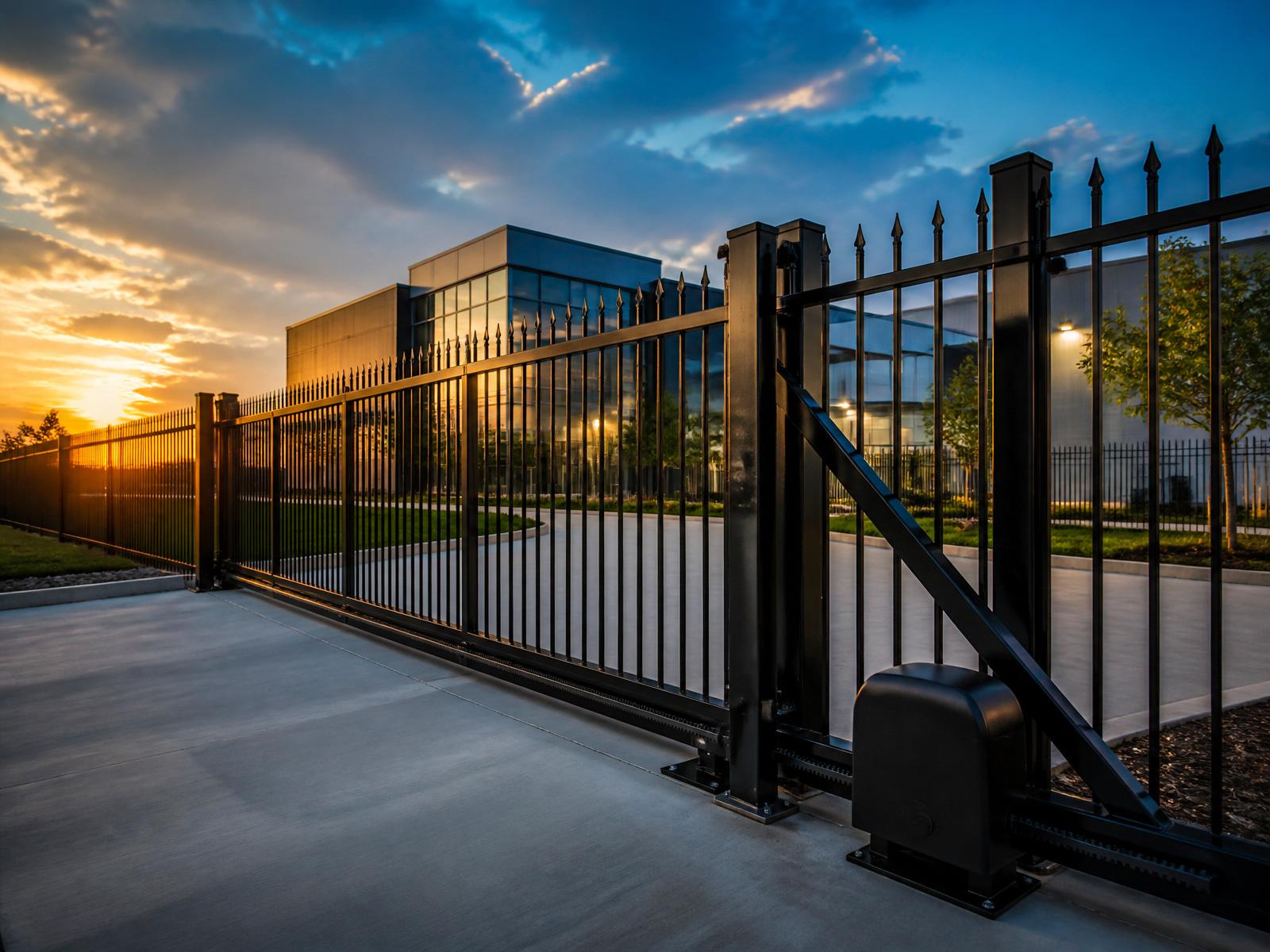
Access control. Rolling and cantilever gates with operators, keypads, card readers, loop detectors, and emergency access provisions. On commercial sites the gate is often the most important part of the project, because it is what actually controls who enters and it is the component that gets used hundreds of times a week.
Dumpster and equipment enclosures. Frequently a code requirement for screening. Usually vinyl or chain link with privacy slats, and the gates take heavy abuse from hauling contractors, so hardware selection matters more than it does anywhere else on the site.
Rooftop and mechanical screening. Screening equipment from view is a common site plan condition.
Athletic and recreational. Ball field backstops, tennis and pickleball court enclosures, and playground fencing for schools, municipalities, and HOAs.
Retaining and safety barriers. Guardrails, bollards, and pedestrian barriers around loading areas and parking.
Multifamily and HOA. Pool enclosures that meet barrier code, perimeter fencing, and amenity area screening. These are usually a blend of security, aesthetics, and liability.
Construction site fencing. Temporary perimeter fence for active job sites, often required by the permit.
What commercial buyers actually care about
Schedule. On a construction project, the fence is often on the critical path for a certificate of occupancy, especially pool barriers and required screening. Missing the date has real cost. We schedule commercial work against the actual project timeline and communicate when material lead times affect it.
Insurance and documentation. Commercial clients need certificates of insurance naming the appropriate parties, licensing documentation, and often lien waivers and W-9s before work starts. Having that paperwork ready without delay is part of the job.
Site plan compliance. Commercial fencing frequently appears on an approved site plan, meaning the height, material, and location are already dictated. Deviating creates a compliance problem at final inspection. We build what the plan calls for and flag discrepancies early rather than after installation.
Coordination with other trades. Fence work has to be sequenced against paving, landscaping, electrical, and utility installation. Setting posts before the asphalt goes down, or running gate operator conduit before the lot is finished, saves substantial money.
Liability. For pool barriers, playgrounds, and pedestrian separation, the fence exists to manage risk. Compliance is not a formality.
Materials for commercial use
Commercial specifications generally call for heavier material than residential. That means thicker gauge chain link framework, heavier aluminum picket profiles, industrial-grade hardware, and reinforced gate posts. The duty cycle is simply higher: a commercial gate may cycle more in a month than a residential gate does in five years.
Ornamental aluminum in commercial grade is increasingly used for street-facing perimeters where appearance matters, often combined with chain link on the back of the property.
Maintenance contracts
Gates fail, hardware wears, and vehicles hit fences in parking lots. Having a fence contractor who will respond to a damaged gate or a breached perimeter matters more than the original install price. Ask about repair response before you award the job.
Who we work with
We handle commercial fencing for property managers, general contractors, municipalities, schools, HOAs, industrial and warehouse facilities, and retail properties throughout Suffolk and Nassau County, including public works projects.
Budget and procurement
Commercial buyers frequently need pricing broken out by scope so it can be allocated across budget lines or compared against a bid tab. We provide itemized proposals separating perimeter fence, gates, operators, and screening, with unit pricing where that helps. For multi-phase projects and property management portfolios, we can hold pricing across phases so budgets set in one fiscal year still work in the next.
Send us the site plan or spec and we will price it accurately. Call Magistrale Fence & Railing at (631) 784-3258 or email info@magistralefencing.com.