
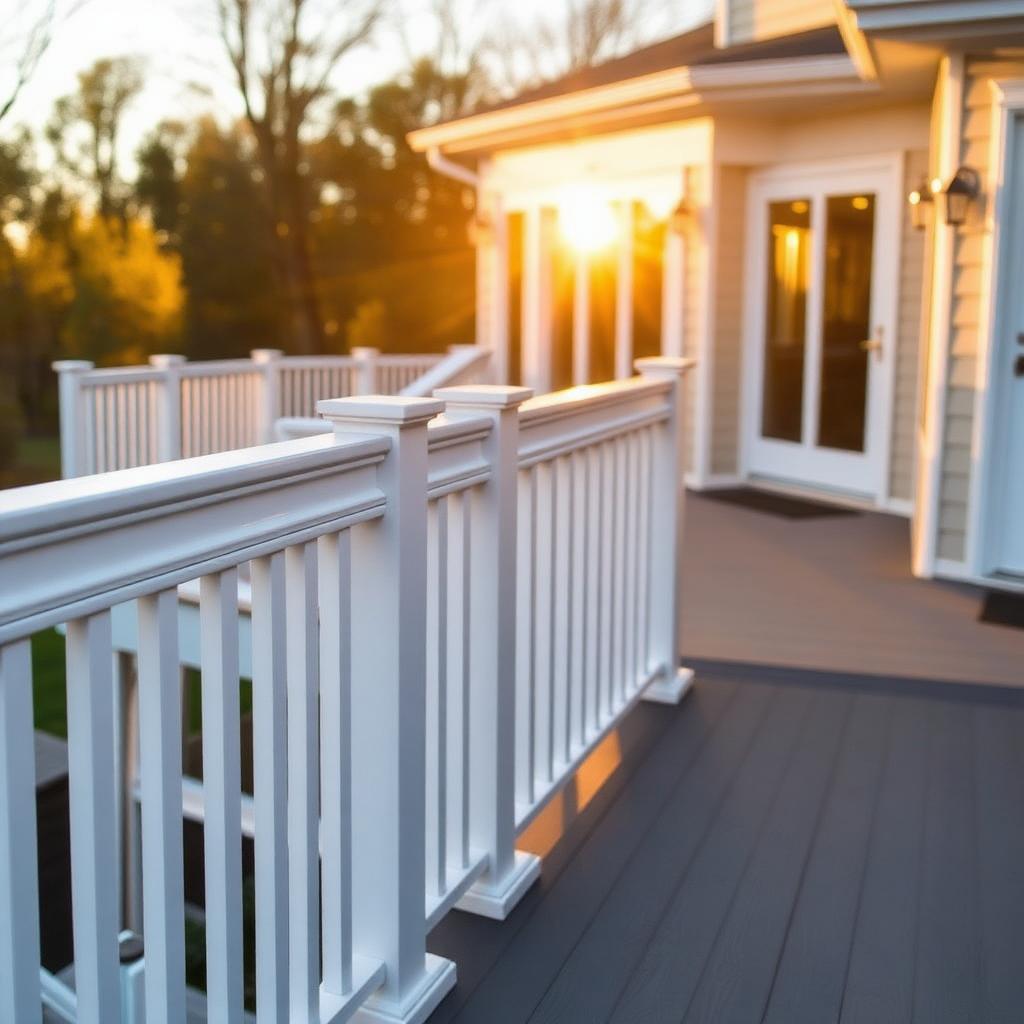
Deck Railing Options: Aluminum, Cable, Vinyl, and Wood Compared
Railings do two jobs at once. They keep people from falling, which is a code requirement, and they frame the view, which is what you actually notice every day. Here is how the four common systems compare.
Aluminum
Powder-coated aluminum is the most popular upgrade on Long Island right now, and for good reason. It does not rust, which matters enormously near salt water. It does not rot, warp, or need staining. Powder coating holds its color for decades, and black aluminum pickets nearly disappear against a view.
Aluminum is also strong, so posts and pickets can be slimmer than wood while meeting load requirements. That means less visual obstruction. Cost sits in the middle of the range and the payback is that you never touch it again beyond an occasional rinse.
Cable railing
Horizontal stainless steel cables run through posts, usually with aluminum or wood frames. The appeal is obvious: it is nearly invisible, which makes it the top choice for waterfront properties and elevated decks with a view worth preserving.
Things to know. Cable systems require substantial end posts because the cables are under real tension, and that tension has to be checked and adjusted periodically. Cable spacing is regulated to satisfy the sphere-passage rule, so cables run closer together than people expect, typically around three inches. Near salt water, specify marine-grade stainless.
Cost is the highest of the four, largely due to hardware and installation labor.
Vinyl
Vinyl railing is low maintenance and affordable, and it pairs naturally with vinyl fencing for a consistent look across the property. It washes clean, it does not rot, and it holds up well against moisture and salt.
The tradeoffs are aesthetic and structural. Vinyl rails and posts are bulkier than aluminum to achieve the same strength, so they block more of the view. Quality varies widely, and cheaper vinyl can yellow or become brittle over time. Most vinyl railing systems use internal aluminum reinforcement in the rails, and that reinforcement is exactly what you should ask about.
Wood
The traditional choice, and the least expensive up front. It matches a wood deck seamlessly and can be stained any color.
It is also the highest maintenance item on your deck. Railings are fully exposed on all sides, hands touch the top rail constantly, and they need cleaning and re-sealing every couple of years to avoid splintering, checking, and greying. Cedar performs better than pressure-treated pine and costs more.
A common compromise is wood posts and top rail with aluminum balusters, which cuts maintenance substantially while keeping a warm wood look.
Composite
Worth mentioning as a fifth option. Composite railing matches composite decking and gives a wood look with vinyl-level maintenance. It is heavier and bulkier than aluminum, and it sits at the higher end of the price range.
Code, which applies regardless of material
Whatever you choose, New York's residential code governs the outcome. In general terms, guards are required on walking surfaces raised more than 30 inches above grade, residential guard height is 36 inches minimum, and openings must not allow a 4-inch sphere to pass through. Guards must resist a specified concentrated load, which is why post attachment method matters as much as the railing itself.
Your building department has final say, and deck permits typically include a railing inspection.
Choosing
Near the water with a view: aluminum or cable. Matching existing vinyl fencing: vinyl. Traditional look on a budget with willingness to maintain: wood. Highest visual impact regardless of cost: cable.
One practical note that gets overlooked. Whatever the material, pay attention to the top rail profile. It is the part you will actually touch every day, and a comfortable graspable rail is worth specifying.
Post attachment is the part nobody sees
Whatever material you choose, the railing is only as strong as its connection to the deck frame. Surface-mounting posts to decking boards alone will not carry the required load. Proper installation means posts through-bolted to the rim joist with blocking, or fastened with a tested hardware system designed for guard posts. This is the item most likely to be done wrong on a DIY deck and the item an inspector will push on hardest.
Lighting
Worth planning at the same time. Post cap lights, under-rail LED strips, and stair riser lights are far easier to install while the railing is going in than to retrofit afterward, and they make an elevated deck genuinely safer at night.
We install railings in every material across Suffolk and Nassau County, including custom fabrication. Call Magistrale Fence & Railing at (631) 784-3258.