
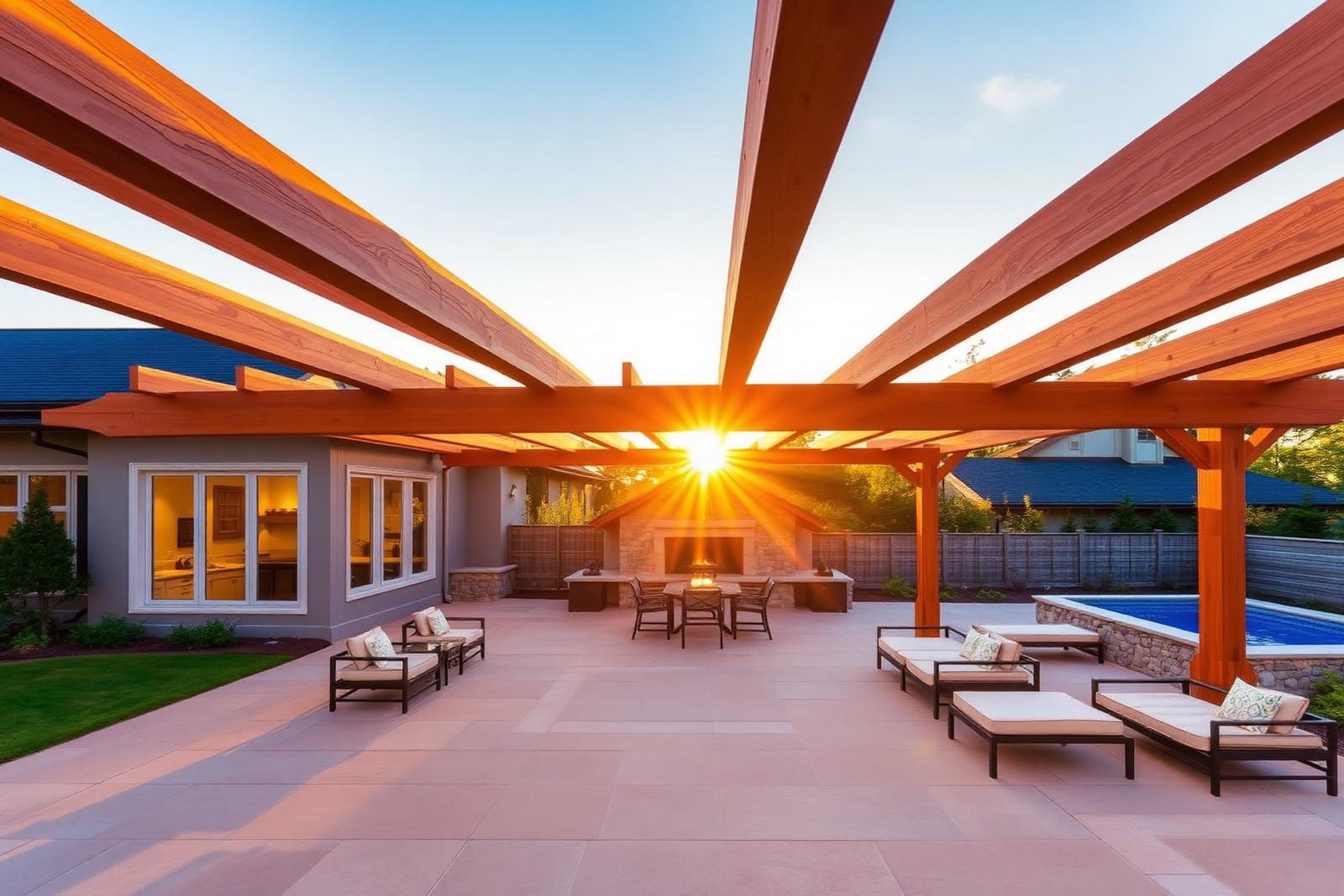
A pergola is the most effective way to make a patio feel like a room. It defines the space, filters the sun, and gives a yard a focal point. Here is what to think about before you commission one.
What a pergola actually does
A traditional pergola has an open roof of rafters and purlins, so it provides filtered shade rather than full cover. That is the point. It cuts the intensity of afternoon sun while keeping the space bright and airy.
If you want genuine rain protection, you want a pavilion with a solid roof, or a pergola fitted with a louvered or retractable canopy system. Be clear about which you are buying, because homeowners are sometimes surprised the first time it rains.
Attached or freestanding
Attached pergolas connect to the house, typically over a patio or a set of doors. They feel like an extension of the home, use fewer posts, and are usually less expensive. The ledger connection to the house has to be flashed and fastened correctly, since a poorly detailed ledger is a water intrusion problem waiting to happen.
Freestanding pergolas can be placed anywhere: over a pool lounge area, at the end of a yard as a destination, or over an outdoor kitchen. They give you flexibility in siting and let you position for the sun and view rather than the house geometry.
Materials
Cedar is the classic. It is beautiful, naturally rot resistant, takes stain well, and can be built to any dimension on site. It needs sealing every few years on Long Island, and larger timbers will check as they dry, which most people consider character.
Pressure-treated pine costs less and can be stained. It moves more as it dries, so heavier timbers and good detailing matter.
Vinyl is the low-maintenance option. It washes clean, never needs staining, and holds a crisp white look. It is limited in span and in design flexibility compared to wood, since it relies on internal reinforcement for structure.
Aluminum systems, especially louvered roof pergolas with adjustable blades, are the premium end. They handle wind and salt well, require essentially no maintenance, and let you close the roof for rain. They cost the most by a wide margin.
Sizing
Undersizing is the most common regret. A pergola needs to comfortably cover the furniture underneath it plus circulation space around that furniture.
For a dining set that seats six, plan for something in the neighborhood of 12 by 16 feet. For a lounge seating group, similar. Anything smaller than about 10 by 10 tends to feel tight once furniture is in place.
Post height matters too. Eight feet at the beam is a common minimum, and taller feels considerably more generous, particularly on a larger structure.
Orientation and sun
Rafter direction determines when you get shade. Rafters running north to south cast moving shadow through the day. Running them east to west gives more consistent midday shade.
Think about where the sun actually is when you use the space. A pergola sized for noon may do nothing for a five o'clock west-facing patio, where a side screen or slatted end panel does far more than roof rafters.
Wind, which matters here
Long Island gets real wind, and a pergola is a large structure with substantial surface area, especially with a canopy installed. Posts need proper footings below the frost line, and post-to-footing connections need appropriate hardware. Attached structures need a properly engineered ledger.
If you plan to add a fabric canopy, say so at design time, since it dramatically increases wind load.
Permits
Many Long Island municipalities require a permit for a pergola, and attached structures almost always do. Setback requirements from property lines apply, and lot coverage limits can come into play. Confirm with your building department before finalizing size and placement.
Extras worth planning now
Run electrical while the structure is open for fans, string lights, and heaters. Consider privacy screening on one or two sides, planting for climbing vines, and integrated benches or a bar top.
Furniture and use come first
One planning habit saves most regrets. Before you settle on dimensions, put the actual furniture in the space, or mark its footprint with tape or cardboard, and live with it for a few days. See where the sun lands at the hours you actually use the yard, check that chairs can push back without hitting a post, and confirm the walking path around the outside still works. It is a free exercise and it prevents the most common complaint, which is a beautiful pergola that turned out slightly too small.
We build custom cedar and vinyl pergolas across Suffolk and Nassau County. Call Magistrale Fence & Railing at (631) 784-3258.