
Waterfront Fencing: How Salt Air Affects Fences on Long Island
We are surrounded by water. Between the Sound, the bays, the canals, and the ocean, a large share of Long Island properties sit in a salt air environment, and salt air is unforgiving to the wrong materials. If your house is anywhere near the water, material selection is the whole ballgame.
What salt actually does
Airborne salt is carried inland on wind and settles as a fine film on every surface. It is hygroscopic, meaning it pulls moisture out of the air, so a salted surface stays damp longer than a clean one. That constant moisture, combined with chloride ions, accelerates corrosion of steel dramatically.
It does not stop at the fence line either. Salt reaches noticeably inland, and homeowners a half mile from the water are often surprised to find corrosion on hardware.
What fails first
In our experience it is almost always fasteners and hardware, not the fence itself. A beautiful aluminum fence installed with the wrong screws will show rust streaks running down the pickets within a couple of seasons. Gate hinges seize. Latches stop operating smoothly. Tension bands on chain link rust through before the mesh does.
This is why hardware specification matters as much as material specification near the water. Stainless steel hardware, and specifically marine-grade stainless where possible, is worth the upcharge. So are aluminum or stainless gate hinges rather than plated steel.
Materials that hold up
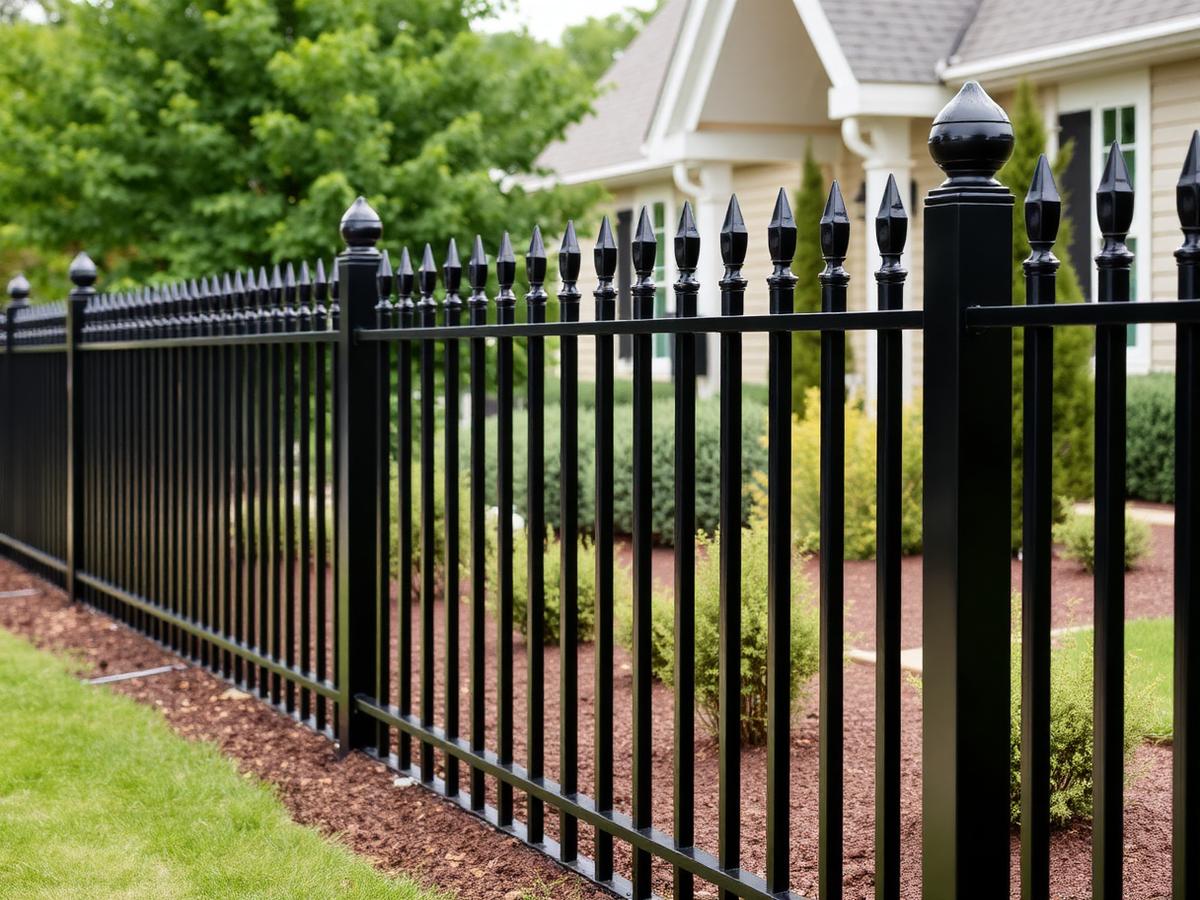
Ornamental aluminum is the standard recommendation for waterfront properties. Aluminum does not rust. It forms a thin oxide layer that protects the metal underneath, and a quality powder coat adds another barrier. It also lets wind and salt spray pass through rather than catching it, and it preserves the water view that made the property worth buying.
Vinyl is immune to salt entirely. It does not corrode and it does not rot. Its consideration on the water is wind, since a solid privacy panel acts as a sail. On exposed waterfront lots that means deeper posts, wider footings, and sometimes a decision to use a spaced picket style instead of solid privacy.
Cedar performs reasonably well. It has no metal to corrode and its natural oils resist decay. It will weather to grey faster in a salt environment, and it needs sealing on schedule. Use stainless fasteners, because standard galvanized screws will bleed rust stains into the wood.
What struggles
Bare galvanized chain link is the most common casualty on the water. The zinc coating sacrifices itself to protect the steel, and in a salt environment it does that job much faster. Vinyl-coated chain link performs considerably better, though cut ends and scratches remain vulnerable.
Traditional wrought iron and steel ornamental fencing will rust in this environment. Powder-coated steel does better than raw, but any breach in the coating starts corrosion.
Wind is the other half of the problem
Nor'easters and coastal storms put serious lateral load on fencing. Open-picket aluminum and spaced designs pass wind. Solid privacy panels resist it, and that force transfers straight into the posts and footings.
On exposed properties this changes the installation, not just the material. Deeper post holes, larger diameter footings, and closer post spacing all become worth the cost. A fence that blows down in year two was not a bargain.
Maintenance that actually extends life
Rinsing salt off with fresh water is the single most effective thing you can do, and almost nobody does it. A hose down two or three times a year, especially after a storm blows spray inland, meaningfully extends the life of hardware and finishes.
Beyond that: lubricate gate hardware annually, touch up any scratch in powder coating promptly, and inspect fasteners each spring for early rust.
The bottom line
Near the water, buy for the environment rather than the price tag. Aluminum or vinyl with stainless hardware, set on properly engineered footings, will outlast a cheaper build several times over.
Think about the neighbors' fences too
One useful piece of research costs nothing. Drive your own street and look at fences that have been up for five or ten years. On a waterfront block you will quickly see which materials and which hardware survived and which are streaked with rust. Local evidence beats any manufacturer's claim, and it tells you specifically what your microclimate does rather than what the coast does generally.
We install throughout the North Shore, South Shore, and East End and know what survives out here. Call Magistrale Fence & Railing at (631) 784-3258.