The Best Fence for Dogs: What Actually Keeps Them In
Dog owners are among our most common customers, and dogs are excellent at finding the one weakness in an otherwise good fence. Choosing well means thinking about your specific dog rather than about fencing in general.
Start by identifying your dog's escape method
Dogs get out in four ways, and each demands a different solution.
Jumpers and climbers. Height is the answer, and for climbers, so is the absence of footholds. A determined athletic dog can clear four feet without much trouble. Six feet handles nearly everything.
Diggers. Height is irrelevant. What matters is what happens at the ground line.
Chewers and pushers. Material strength and picket spacing matter most.
Squeezers. Small breeds and puppies exploit gaps that look far too narrow to an adult human.
Watch your dog for a week before you buy. Most owners already know which category applies.
Solid privacy fencing, vinyl or wood
Often the best all-around choice. A solid six-foot panel gives no footholds, no visibility, and no gaps.
The visibility part is underrated. Many dogs are reactive to what they see, not to what exists. A dog that barks and lunges at every passing person or dog through a chain link fence frequently becomes calm behind a solid one. Removing the trigger removes the behavior, and it also reduces fence-line running that wears a track in your lawn.
The consideration is that a chewer can work on a bottom rail, and vinyl in particular is not chew proof.
Chain link
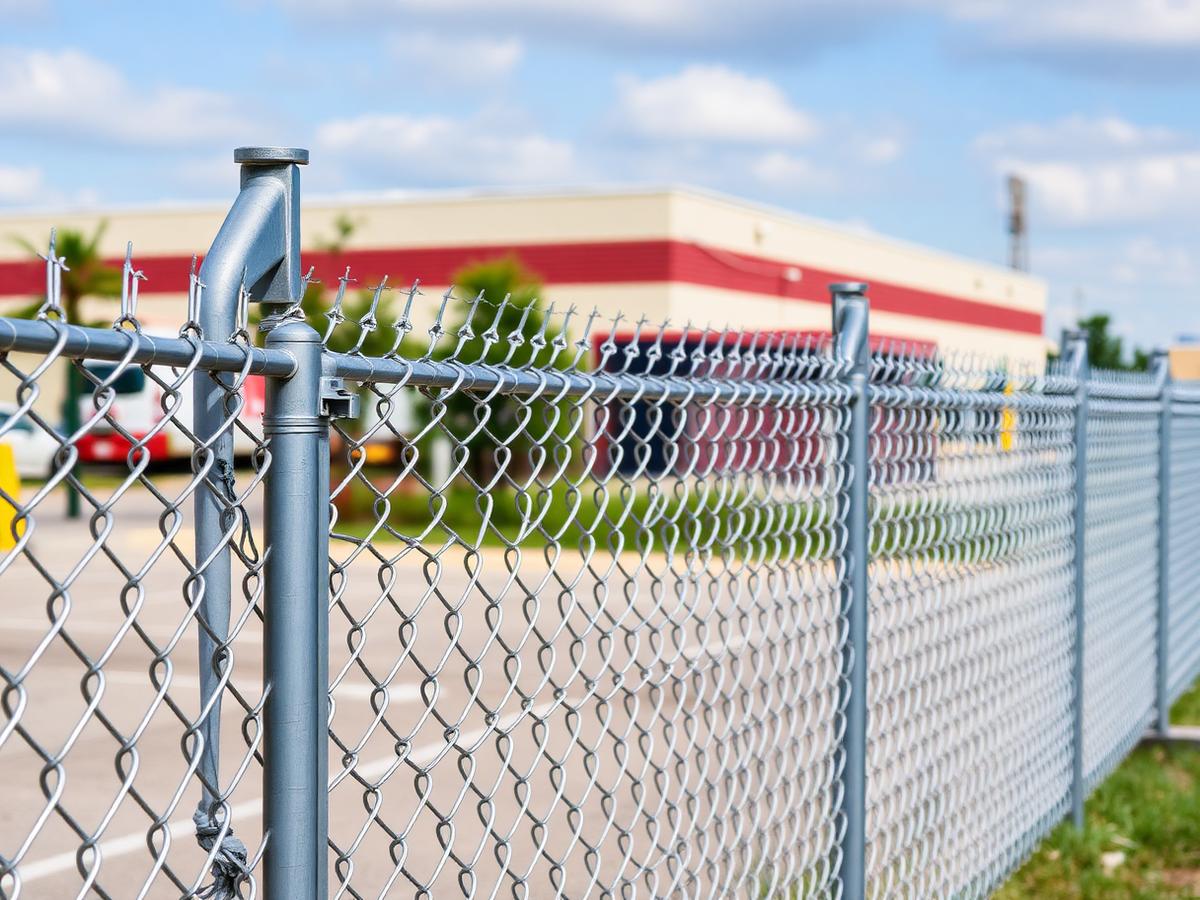
The traditional dog fence for practical reasons. It is strong, hard to chew through, difficult to break, and inexpensive per foot.
The weaknesses are that the mesh gives climbers a perfect foothold, and that full visibility can feed reactive behavior. Black vinyl-coated chain link looks far better than bare galvanized and adds durability.
For climbers, extensions angled inward at the top help considerably.
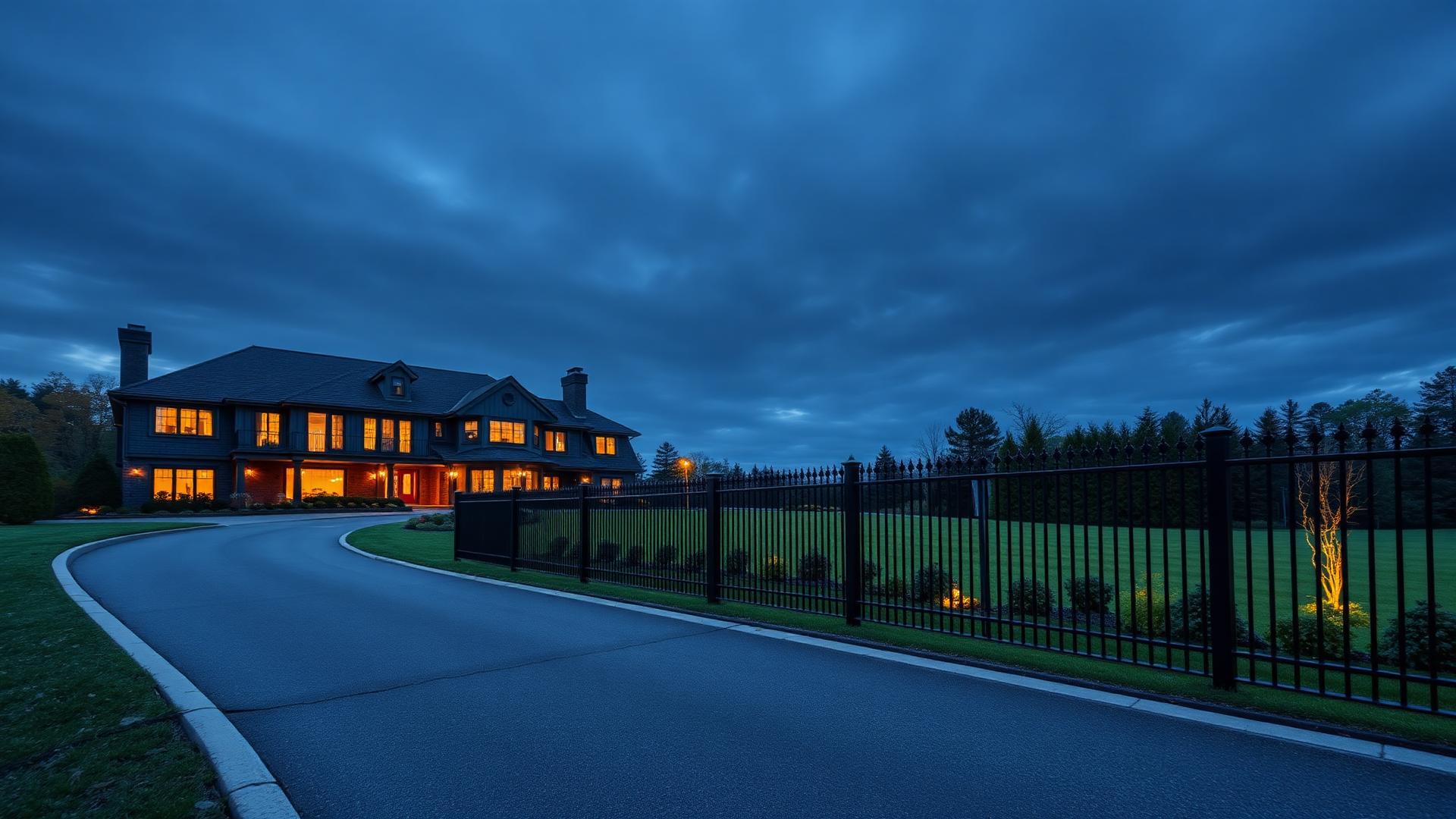
Ornamental aluminum
Attractive and durable, and it works for many dogs. The critical detail is picket spacing. Standard residential spacing is wide enough for small breeds and puppies to slip through without slowing down.
The fix is a puppy picket panel, which adds extra vertical pickets along the lower portion to tighten spacing where it matters. Specify this at order time. Retrofitting is possible but more expensive.
Handling the digger
This is entirely a ground-line problem and there are several proven approaches:
- Bury hardware cloth or wire mesh along the fence line, extending downward and outward in an L shape
- Install a concrete or paver footing trench under the fence line
- Set a pressure-treated or composite kickboard tight to the ground on wood and vinyl fences
- Lay landscape fabric with gravel along the base
- Watch the corners specifically, since most dogs start digging where two runs meet
Grade changes are where dogs escape
On sloped yards, stepped panels leave triangular gaps under the fence. Those gaps look small to us and enormous to a beagle. Racked panels that follow the grade, or custom-cut bottoms, close them.
Gates deserve attention
Gates are the weak point on nearly every dog fence. Use latches that a nose cannot lift and that a paw cannot operate. Two-stage or lockable latches are worth it for clever breeds. Keep the gap under the gate consistent with the rest of the fence. And consider a self-closing hinge, since the most common escape story starts with a gate left ajar.
A note on invisible fencing
Buried electronic systems have a place, but they do not physically contain a dog and they do nothing to keep other animals or people out of your yard. Highly motivated dogs run through the correction. For most owners, a physical fence is the durable answer.
Height recommendations
Small breeds are usually fine at four feet with tight spacing and dig protection. Medium dogs generally want five feet. Large, athletic, or working breeds should get six.
Fence line landscaping matters
One detail owners overlook: anything stacked near the fence becomes a launch pad. Firewood piles, garbage cans, air conditioning units, planters, and children's play equipment placed against a fence turn a six-foot barrier into a four-foot one for an athletic dog. Keep a clear zone along the inside of the fence line, and check it again each season, because these things migrate.
Tell us about your dog and we will build for that dog. Call Magistrale Fence & Railing at (631) 784-3258.