
Deer Fencing on Long Island: What Height Actually Works
Deer pressure across Long Island has become severe, particularly through the North Shore, the Pine Barrens communities, and much of the East End. Homeowners who invested in landscaping are watching it disappear overnight. Here is what actually works.
Height is the whole conversation
An adult white-tailed deer can clear an eight-foot fence from a standing start when motivated. That is the number to plan around.
A four-foot fence is a non-factor. A six-foot fence stops some deer some of the time, particularly if they cannot see a good landing zone on the other side. Eight feet is the height that reliably works and it is what agricultural and horticultural operations use.
If your local code caps fence height below eight feet, you need one of the workarounds below or a variance.
Why deer do not jump what they cannot see
Deer will not commit to a jump when they cannot evaluate the landing. This is why solid privacy fencing works at lower heights than open fencing. A six-foot solid fence is a meaningfully better deer barrier than a six-foot open picket fence, because the deer cannot see where it would land.
This also explains why dense evergreen plantings on the far side of a fence improve performance.
The double fence trick
Deer are excellent high jumpers but poor broad jumpers. Two parallel fences roughly four to five feet apart, each only four or five feet tall, is remarkably effective, because the deer cannot clear both and will not land between them.
This works well where a height limit prevents an eight-foot fence, and where you have the space. It also looks better than a single tall barrier and the gap can be planted.
Angled or slanted fencing
A fence tilted outward at roughly a 45-degree angle, or a vertical fence with an outward-leaning top extension, defeats the deer's jump geometry. They approach, see the overhang, and generally decline. This lets you get effective performance from a shorter vertical structure.
Material options
Polypropylene mesh is the most common dedicated deer fence. It is black, visually recedes into a wooded background almost completely, and is affordable at eight-foot heights. Installed on posts or attached to trees at the property edge, it is nearly invisible from twenty feet away. It is not a security fence and it can be damaged, but for deer specifically it does the job.
Woven wire and welded wire on wood or steel posts is more durable and more visible. A common approach is a heavier lower section with lighter mesh above.
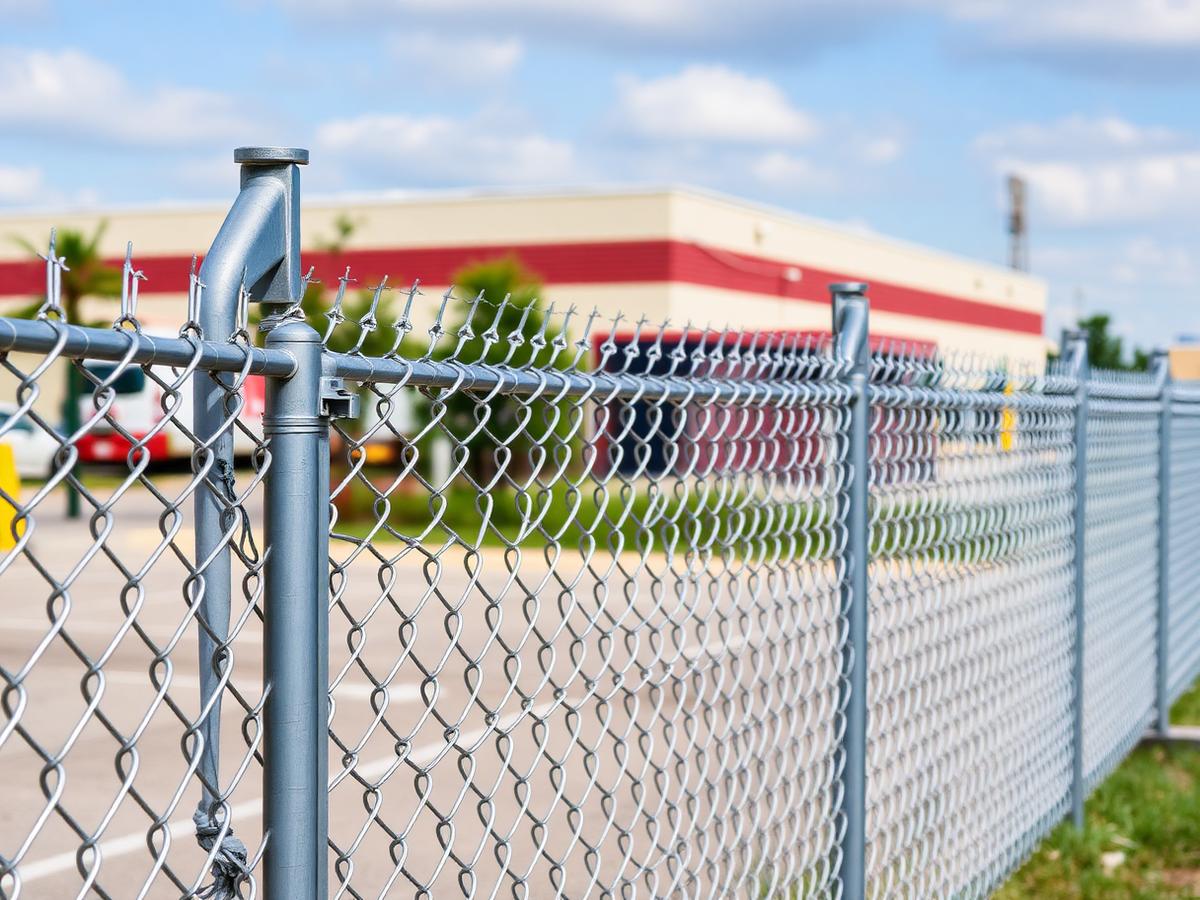
Chain link at eight feet works and is the most durable option, though it is expensive at that height and quite visible.
Custom cedar or vinyl privacy at maximum permitted height, combined with plantings, is the choice for homeowners who want the yard to look good first and deter deer second.
Details that determine success
- Keep it tight to the ground. Deer go under fences far more often than people expect. Stake mesh to grade or run a tension wire along the bottom.
- Gates are the failure point. Every gate must be the same height as the fence and must actually be kept closed. One propped-open gate undoes the entire installation.
- Close the whole perimeter. Deer find the gap. A fence around three sides of a property is a funnel, not a barrier.
- Watch the grade. Deer entering from an uphill side effectively face a shorter fence.
Enclose the garden instead
For many homeowners the practical answer is not fencing the whole property but fencing what matters. An eight-foot enclosure around a vegetable garden or an ornamental bed is far cheaper, easier to permit, and completely effective.
Check your code first
Eight feet exceeds the by-right height in most Long Island municipalities, so plan on a permit or variance conversation. Some jurisdictions treat agricultural deer fencing differently than residential fencing.
Protect individual plants as a stopgap
If a full enclosure is not in the budget this season, targeted protection buys time. Wire cages around young trees prevent buck rub in the fall, which kills more new plantings than browsing does. Netting over specific beds protects them through the highest pressure months. Deer repellents work modestly and need reapplication after rain, so treat them as a supplement to a physical barrier rather than a substitute.
We install deer fencing and custom perimeter solutions across Suffolk and Nassau County. Call Magistrale Fence & Railing at (631) 784-3258.