Cedar vs. Pressure-Treated Pine: Which Wood Fence Lasts Longer?
If you have decided on a wood fence, this is the next fork in the road. Both materials are used constantly on Long Island, and the right pick depends on where the fence goes, how long you plan to keep it, and how much maintenance you will realistically do.
What they actually are
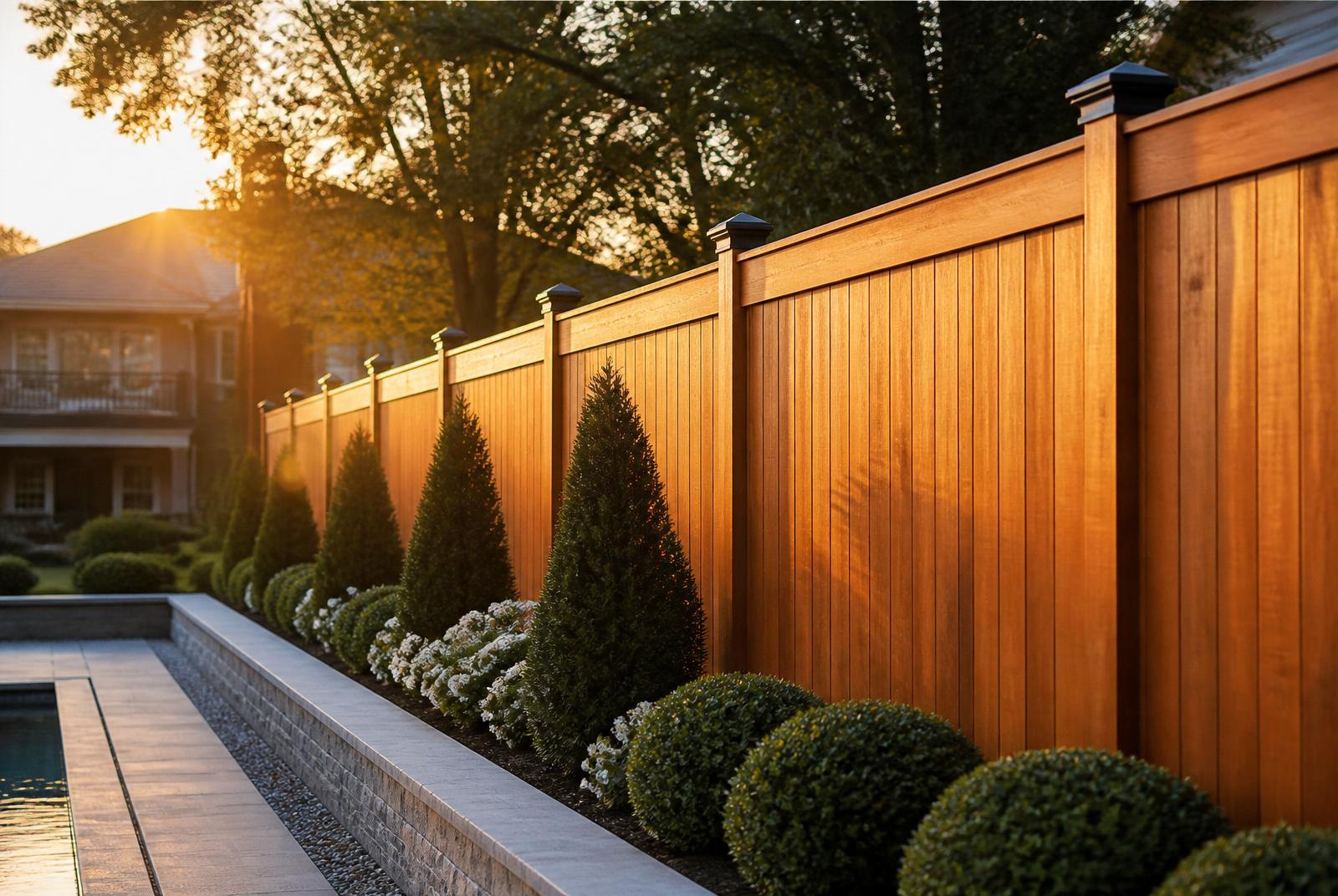
Western red cedar is naturally rot and insect resistant. The tree produces oils and tannins that make the heartwood unappealing to fungus and insects, with no chemical treatment involved. It is dimensionally stable, meaning it moves less with humidity swings, and it holds stain beautifully.
Pressure-treated pine is southern yellow pine that has had preservative chemicals forced into the wood under pressure. That treatment is what gives it rot resistance, since untreated pine outdoors on Long Island would fail quickly.
Cost
Pressure-treated is meaningfully cheaper, typically running well below cedar for equivalent footage. That gap is the main reason stockade fences are the most common wood fence in the region.
Cedar costs more up front and, in a custom board-on-board or horizontal design, can approach or exceed vinyl pricing.
How they age
This is the real difference. Pressure-treated lumber arrives wet from the treatment process and is still shedding moisture when it is installed. As it dries it shrinks, twists, cups, and checks. That is why a stockade fence that looked tight in May shows gaps by September and why some boards end up visibly bowed within a year or two.
Cedar arrives drier and more stable. It still moves, but far less dramatically. Left alone it weathers to a soft silver-grey. Sealed, it holds a warm brown tone.
Both grey out without a finish. If you want color, you need to seal, and you need to keep sealing.
Lifespan on Long Island
With reasonable maintenance, expect roughly fifteen to twenty years from a quality cedar fence, and roughly ten to fifteen from pressure-treated. Both estimates assume the fence is sealed periodically and that water is not sitting against it.
Neglect changes those numbers fast. An unsealed pressure-treated fence in a shaded, damp corner of a yard can look rough in five years.
The post question, which matters more than the panel
Here is what actually determines when a wood fence dies on Long Island: the posts rot at the soil line. That is where oxygen, moisture, and organic material meet, and it is where fungus does its work.
For that reason, pressure-treated posts rated for ground contact are standard even under cedar panels. Ground contact rating is not the same as above-ground rating, and it matters. A cedar fence with cedar posts looks lovely and will need post replacement sooner than one built on treated posts.
Some installers set posts in concrete, some set them in gravel or a gravel base with a concrete collar, and there are legitimate arguments both ways about drainage. What is not debatable is that a post sitting in a concrete cup that traps water will rot faster than one that drains.
Maintenance either way
Plan on cleaning and sealing every two to three years on Long Island. Our humidity, coastal moisture, and freeze-thaw cycles are harder on wood than the national average. Pressure-treated lumber should be allowed to dry out for several months after installation before its first sealing, or the finish will not penetrate.
Keep sprinklers off the fence, keep mulch and soil pulled back from the base, and trim vegetation so air can move. Those three habits add years.
How to choose
Choose cedar when the fence is highly visible, when you want a custom design like board-on-board or horizontal slats, when you plan to stay in the house a long time, or when you simply want it to look better.
Choose pressure-treated when budget is the driver, when the fence is on a back property line where appearance matters less, or when you need a large amount of footage covered economically.
A note on grade stamps
Not all cedar is the same. Western red cedar is sold in several grades, and the lower grades carry more knots, more sapwood, and less of the rot-resistant heartwood that makes cedar worth the money in the first place. Ask what grade you are getting. The same applies to pressure-treated lumber, where the retention level and the ground-contact rating are printed on the end tag and are worth reading before the material goes in the ground.
We install both and use ground-contact rated posts as standard. Call Magistrale Fence & Railing at (631) 784-3258 for a free estimate anywhere in Suffolk or Nassau County.