Vinyl vs. Wood Fence: Which Holds Up Better on Long Island?
This is the decision most homeowners here get stuck on. Both materials work on Long Island. They just fail in different ways and ask for different things from you over the years.
Up-front cost
Wood usually starts cheaper. A standard six-foot pressure-treated stockade run is typically the lowest-cost privacy option available. Vinyl generally costs more on day one, and custom cedar in a board-on-board or shadowbox pattern often costs more than vinyl.
If your only measure is the check you write this spring, wood wins. If your measure is cost per year of service, the math usually flips.
Maintenance, which is the real difference
Vinyl gets washed. That is essentially the whole maintenance program. A garden hose, a soft brush, and mild soap once or twice a year keeps it looking right. It does not need staining, sealing, or painting, and it will not rot.
Wood needs attention. To get full life out of a cedar or pressure-treated fence on Long Island, plan on cleaning and re-sealing every two to three years. Skip it and the wood greys, checks, and eventually cups and splits. Some homeowners love the silvered weathered look and let it go grey on purpose, which is a legitimate choice, but understand that the sealing schedule is about moisture protection, not just color.
Figure a few hundred dollars in materials plus a weekend of labor each cycle, or a contractor bill if you hire it out. Over twenty years that adds up meaningfully.
How each handles our weather
Long Island puts fences through a specific set of conditions: humid summers, nor'easters, coastal wind, heavy wet snow, and dozens of freeze-thaw cycles between December and March.
Vinyl handles moisture and salt without any complaint. It does not rot, and insects ignore it. Its weakness is impact in deep cold. Vinyl gets more brittle at low temperatures, so a falling limb in January can crack a panel that would have survived the same hit in July. The upside is that a cracked vinyl panel usually slides out and gets replaced individually without touching the posts.
Wood breathes and moves with humidity, which is why boards cup and warp. Ground contact is where it dies. Even pressure-treated posts eventually rot at the soil line, which is the single most common reason wood fences fail here. Cedar has natural oils that resist rot and insects better than pine, which is why it holds up well above grade, though it is not immune below it.
Lifespan you can plan on
With honest maintenance, a quality cedar fence on Long Island runs roughly fifteen to twenty years, with post replacement likely somewhere in that window. Pressure-treated stockade often runs ten to fifteen. Heavy-wall vinyl from a real manufacturer, installed on properly set posts, routinely goes twenty-five to thirty-plus years and often outlives the homeowner's time in the house.
Appearance and resale
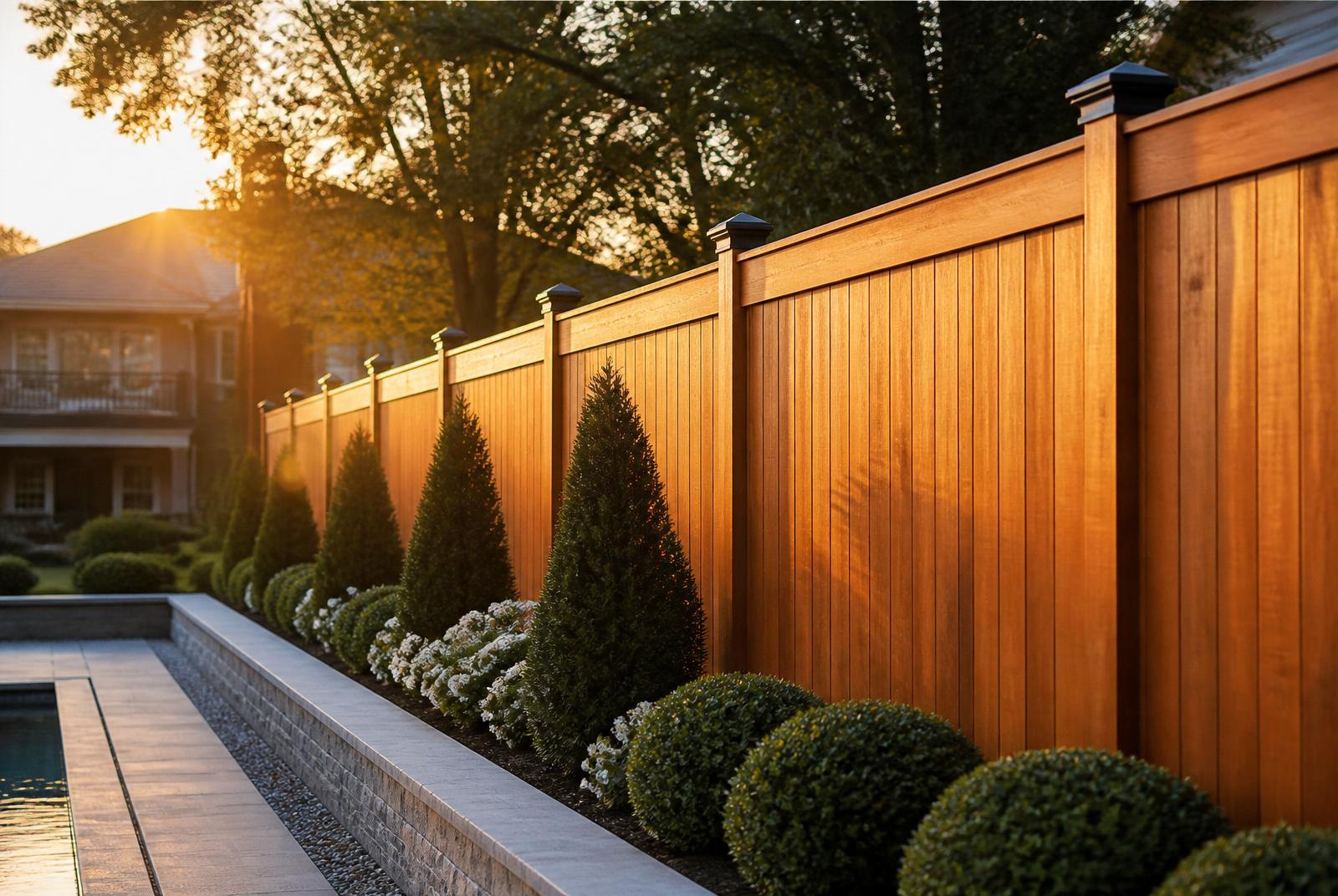
Wood is warmer, and nothing in vinyl truly matches the look of real cedar in board-on-board or a horizontal slat design. Wood also takes stain, so you can change the color later.
Vinyl looks clean and uniform and reads as new for a long time. Buyers who tour a house tend to register a bright white vinyl fence as one less project waiting for them, which matters when you sell.
Neither is a bad answer. Wood wins on character and up-front price. Vinyl wins on total cost of ownership and on never having to think about it.
How to decide
If you love the look of natural wood, plan to stay a long time, and do not mind a maintenance weekend every couple of years, go cedar and go heavy on post quality. If you want to install it and forget it, especially near the water, go vinyl and buy a heavy-wall product rather than the cheapest panel available.
One more consideration: repairs
When a vinyl panel cracks, it usually slides out and gets replaced individually without disturbing the posts, and the repair is close to invisible if the profile is still manufactured. Wood is easier to source but harder to match, since new boards will not blend with weathered ones for years. Ask your installer whether your vinyl profile is still in production before you buy, because discontinued systems are the most common reason a small repair turns into a full replacement down the road.
Not sure which fits your yard and budget? We install both and we will tell you honestly which makes more sense for your property. Call Magistrale Fence & Railing at (631) 784-3258 for a free estimate anywhere in Suffolk or Nassau County.