Stair Railings and Handrails: What the Code Requires in New York
Handrails and guards are among the most frequently corrected items on a residential inspection, largely because homeowners and even some contractors treat them as trim rather than as structure. Here is a plain-English overview of what New York's residential code generally requires.
Handrails and guards are two different things
This distinction causes most of the confusion.
A handrail is what you grip while using stairs. It runs along the flight at a height suited to the hand.
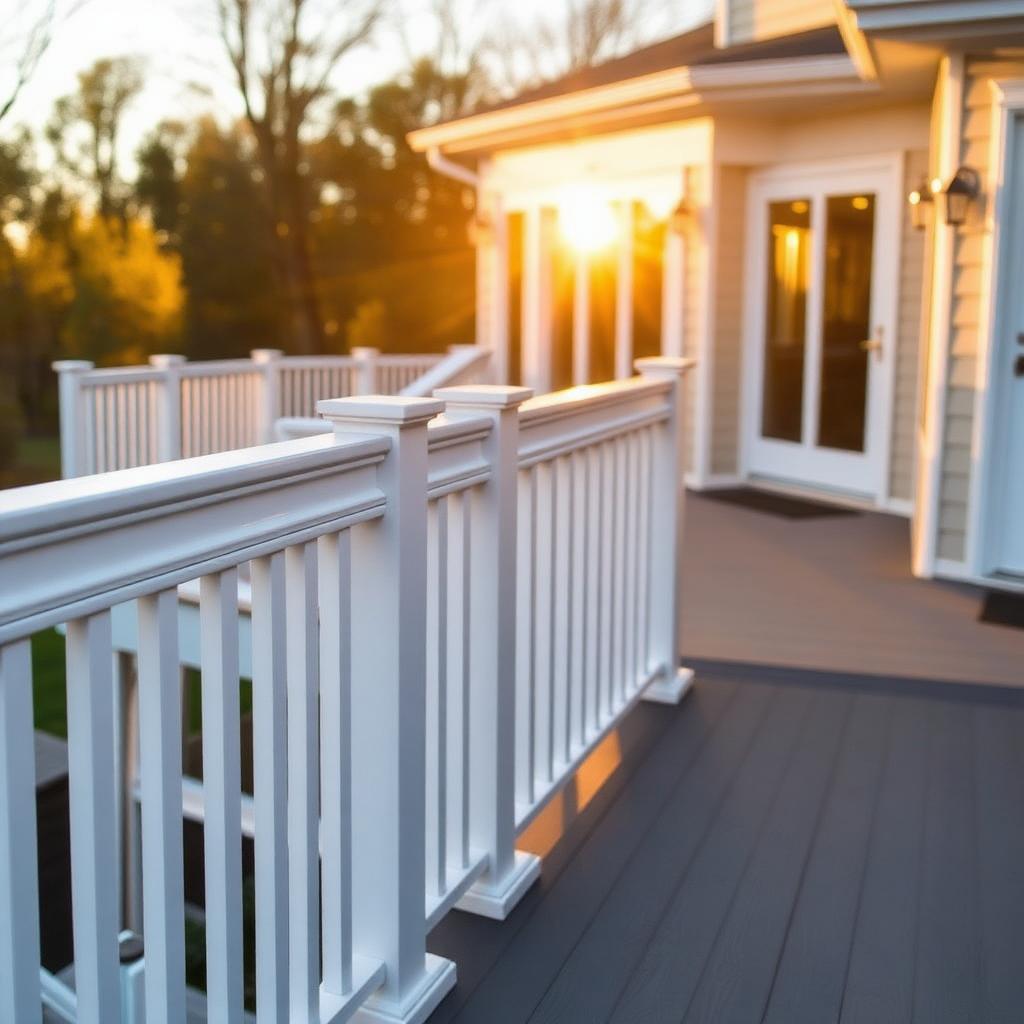
A guard is the barrier that prevents someone from falling off an open edge, whether that is a deck, a landing, a balcony, or the open side of a stair. A guard often contains balusters or infill.
A stair with an open side typically needs both, and they have different height requirements. A guard alone does not satisfy the handrail requirement, and this is the single most common correction issued.
When a handrail is required
Generally, any stairway with four or more risers requires at least one handrail. It must be continuous for the full length of the flight, from a point directly above the top riser to a point directly above the bottom riser.
Handrail height
Measured vertically from the sloped plane of the stair nosings, handrail height is generally required to fall between 34 and 38 inches.
Grip, which people always get wrong
The code cares about whether you can actually grab it in a fall. Round or oval handrails are typically required to have an outside diameter roughly between 1.25 and 2 inches. Non-circular profiles have their own dimensional limits on perimeter and cross-section.
This is why a wide flat 2x4 laid on top of posts does not qualify as a handrail. It is not graspable. It may look fine and it may be sturdy, but it will fail inspection.
Clearance from the wall
A wall-mounted handrail generally needs at least 1.5 inches of clear space behind it so your hand can wrap fully around.
Guard height
For residential construction, guards are generally required where a walking surface is more than 30 inches above the grade or floor below, measured within a horizontal distance of 36 inches.
Residential guard height is generally 36 inches minimum, measured from the walking surface to the top of the guard.
Opening limits
Guards must not permit passage of a 4-inch sphere. On the open side of a stair, the triangular opening formed by the tread, riser, and bottom rail is measured against a 6-inch sphere.
These limits exist for child safety, and inspectors do carry the spheres.
Strength
Guards and handrails must resist a specified concentrated load applied in any direction. In practice this means the connection matters more than the rail. A beautiful railing lag-bolted into deck rim board without proper hardware can fail the load requirement even though it feels solid to the hand. Post attachment method, blocking, and tension hardware are what make the assembly work.
Exterior stair railings on Long Island
Everything above applies outdoors, plus weather. Salt air corrodes fasteners and mounting hardware, freeze-thaw loosens connections, and constant moisture attacks wood at the connection points.
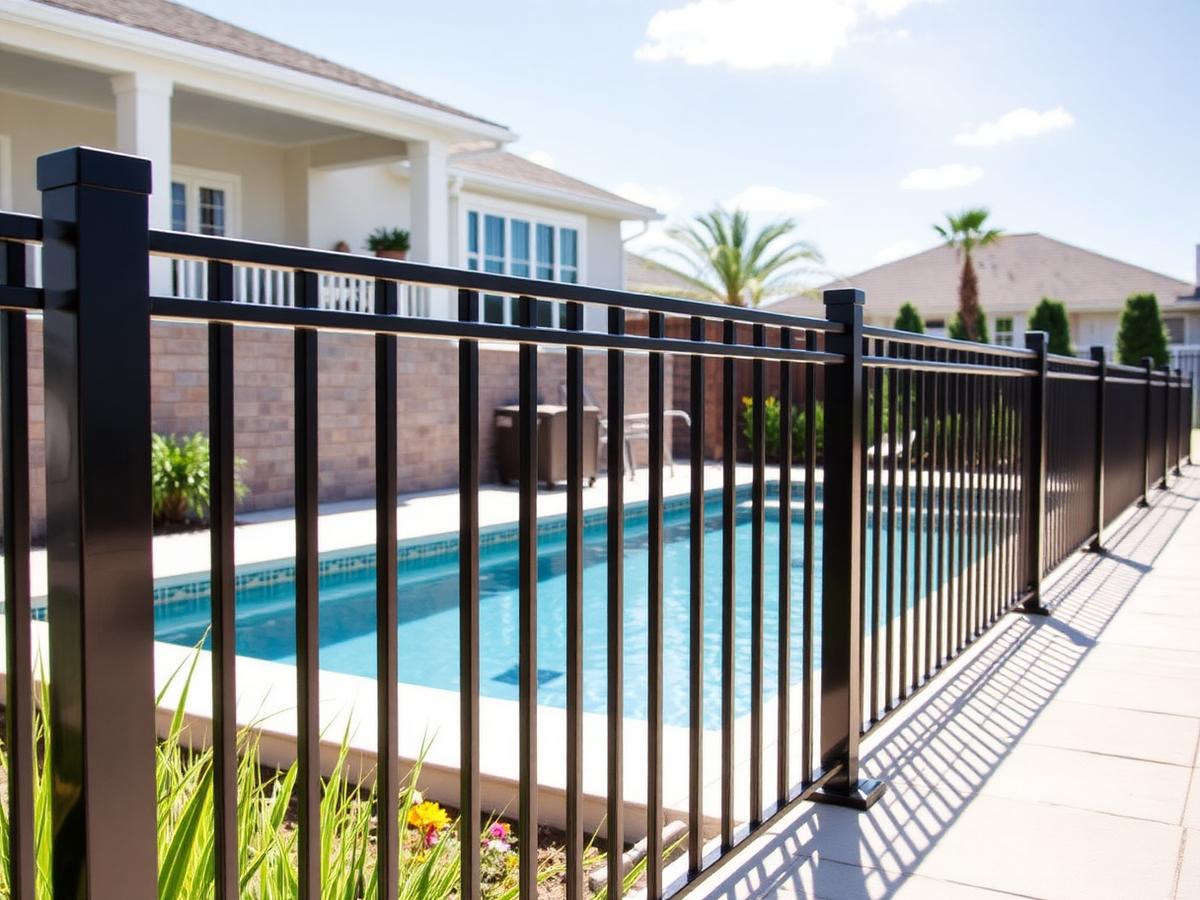
Aluminum is the practical choice for exterior handrails here. It does not rust, it holds powder coating for decades, and it can be fabricated to any run. Custom aluminum stair rails for stoops and entry steps are among the most requested items we build, since they solve both the code requirement and the maintenance problem at once.
When you need to address this
- Building a new deck, stoop, or exterior stair
- Selling a house, since inspectors and buyers' attorneys flag missing handrails routinely
- After a home inspection has already flagged it
- Whenever a handrail is loose, since a rail that moves is worse than none because people trust it
- Aging in place, where a properly graspable rail is a genuine safety item
Confirm locally
Municipalities can amend and enforce differently, and existing conditions can be treated differently from new work. Your building department is the authority.
We fabricate and install custom aluminum, wrought-style, and wood handrails and guards across Suffolk and Nassau County. Call Magistrale Fence & Railing at (631) 784-3258.
This article is general information, not a code ruling. Confirm requirements with your local building department.